

Featured Publications
-
![]()
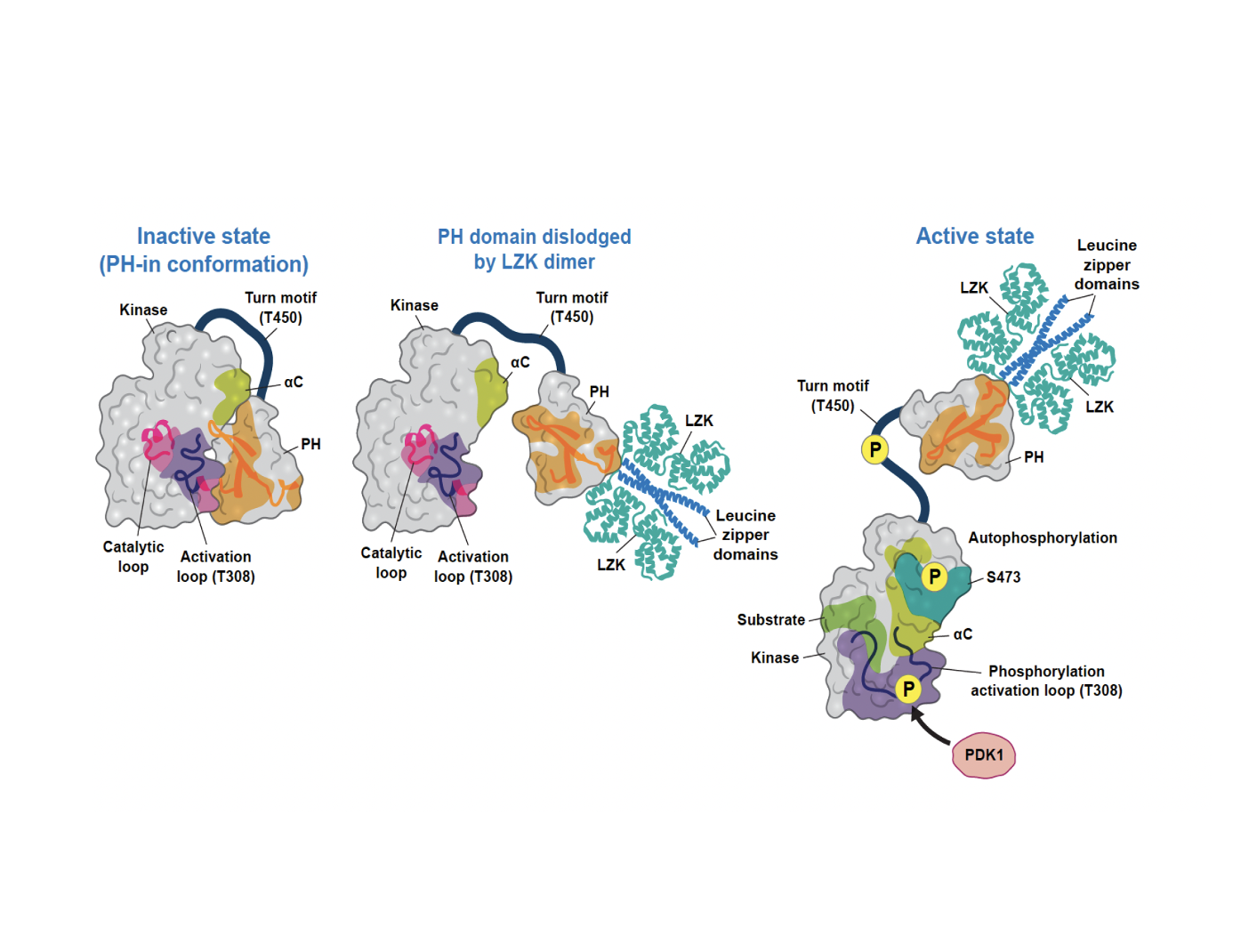
Suppression of AKT Activation Through LZK Inhibition Limits Tumor Growth in Esophageal and Head and Neck Cancers
Esophageal squamous cell carcinoma (ESCC) is a highly lethal cancer with limited known oncogenic drivers and poor treatment options. We identify MAP3K13 amplification, encoding the kinase LZK, in ~60% of ESCC and show that these tumors are dependent on LZK for survival. Pharmacologic inhibition or genetic depletion of LZK reduces viability of MAP3K13-amplified ESCC cells and suppresses tumor growth in patient-derived xenograft models. Mechanistically, LZK sustains AKT activation in ESCC and head and neck squamous cell carcinoma by functioning as a non-catalytic scaffold that promotes AKT phosphorylation at S473 and T450. This activity depends on direct LZK–AKT interaction, and AKT activation can be rescued by drug-resistant LZK, confirming target specificity. LZK facilitates AKT autophosphorylation by displacing AKT’s PH domain, and LZK inhibition disrupts this interaction. Together, these findings reveal a MAP3K13/LZK-driven signaling dependency and support LZK as a therapeutic target in ESCC and HNSCC.
-
![]()
Targeting c-MYC and gain-of-function p53 through inhibition or degradation of the kinase LZK suppresses the growth of HNSCC tumors
The worldwide annual frequency and lethality of head and neck squamous cell carcinoma (HNSCC) is not improving, and thus, new therapeutic approaches are needed. Approximately 70% of HNSCC cases have either amplification or overexpression of MAP3K13, which encodes the kinase LZK. Here, we found that LZK is a therapeutic target in HNSCC and that small-molecule inhibition of its catalytic function decreased the viability of HNSCC cells with amplified MAP3K13. Inhibition of LZK suppressed tumor growth in MAP3K13-amplified xenografts derived from HNSCC patients. LZK stabilized the transcription factor c-MYC through its kinase activity and gain-of-function mutants of p53 in a kinase-independent manner. We designed a proteolysis-targeting chimera (PROTAC) that induced LZK degradation, leading to decreased abundance of both c-MYC and gain-of-function p53, and reduced the viability of HNSCC cells. Our findings demonstrate that LZK-targeted therapeutics, particularly PROTACs, may be effective in treating HNSCCs with MAP3K13 amplification.Defining LZK as a critical driver of head and neck and esophageal cancers. Elucidate the mechanisms by which this kinase drives cancer cell viability and develop novel treatment approaches to target this kinase including small molecule inhibitors, ADCs, and degraders.
-
![]()
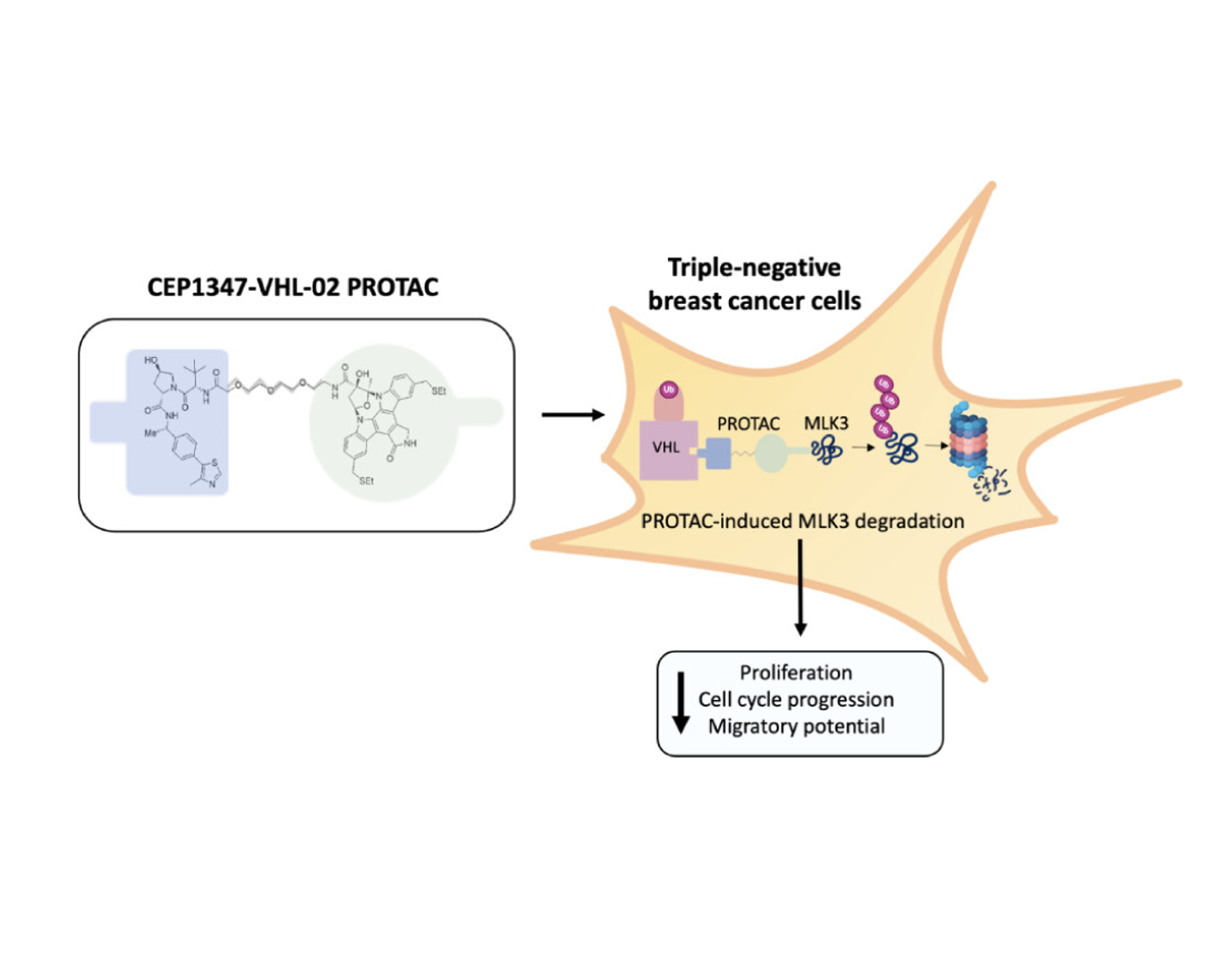
Selective Degradation of MLK3 by a Novel CEP1347-VHL-02 PROTAC Compound Limits the Oncogenic Potential of TNBC
Triple-negative breast cancer (TNBC) is associated with poor prognosis because of the lack of effective therapies. Mixed-lineage protein kinase 3 (MLK3) is a protein that is often upregulated in TNBC and involved in driving the tumorigenic potential of cancer cells. Here, we present a selective MLK3 degrader, CEP1347-VHL-02, based on the pan-MLK inhibitor CEP1347 and a ligand for E3 ligase von Hippel-Lindau (VHL) by employing proteolysis-targeting chimera (PROTAC) technology. Our compound effectively targeted MLK3 for degradation via the ubiquitin-proteasome system in several cell line models but did not degrade other MLK family members. Furthermore, we showed that CEP1347-VHL-02 robustly degraded MLK3 and inhibited its oncogenic activity in TNBC, measured as a reduction of clonogenic and migratory potential, cell cycle arrest, and the induction of apoptosis in MDA-MB-468 cells. In conclusion, we present CEP1347-VHL-02 as a novel MLK3 degrader that may be a promising new strategy to target MLK3 in TNBC.
-
![]()
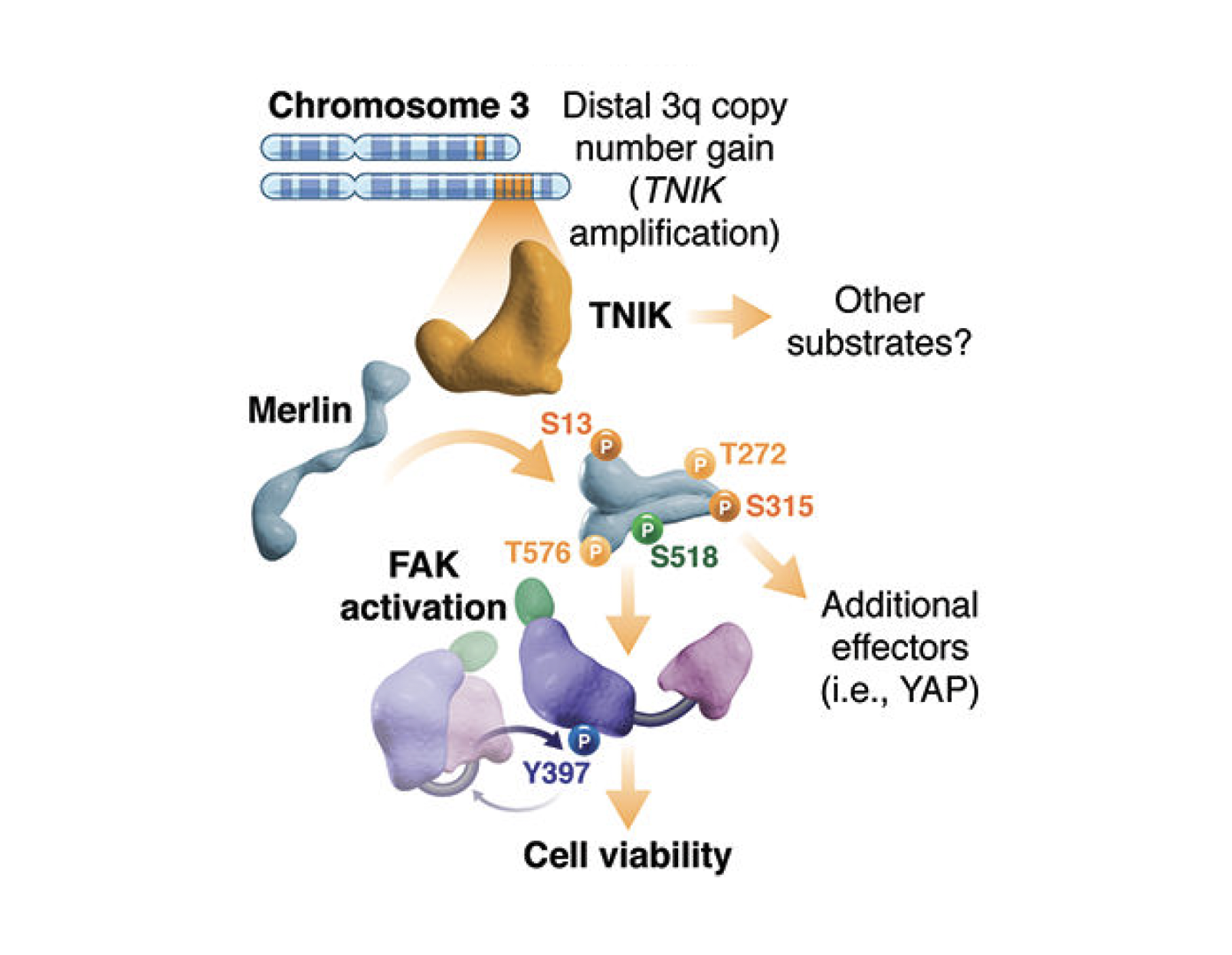
TNIK Is a Therapeutic Target in Lung Squamous Cell Carcinoma and Regulates FAK Activation through Merlin
Lung squamous cell carcinoma (LSCC) is the second most prevalent type of lung cancer. Despite extensive genomic characterization, no targeted therapies are approved for the treatment of LSCC. Distal amplification of the 3q chromosome is the most frequent genomic alteration in LSCC, and there is an urgent need to identify efficacious druggable targets within this amplicon. We identify the protein kinase TNIK as a therapeutic target in LSCC. TNIK is amplified in approximately 50% of LSCC cases. TNIK genetic depletion or pharmacologic inhibition reduces the growth of LSCC cells in vitro and in vivo. In addition, TNIK inhibition showed antitumor activity and increased apoptosis in established LSCC patient-derived xenografts. Mechanistically, we identified the tumor suppressor Merlin/NF2 as a novel TNIK substrate and showed that TNIK and Merlin are required for the activation of focal adhesion kinase. In conclusion, our data identify targeting TNIK as a potential therapeutic strategy in LSCC. SIGNIFICANCE: Targeted therapies have not yet been approved for the treatment of LSCC, due to lack of identification of actionable cancer drivers. We define TNIK catalytic activity as essential for maintaining LSCC viability and validate the antitumor efficacy of TNIK inhibition in preclinical models of LSCC.This article is highlighted in the In This Issue feature, p. 1307.

The SRC family kinase inhibitor NXP900 demonstrates potent antitumor activity in squamous cell carcinomas
Dash S, Hanson S, King B, Nyswaner K, Foss K, Tesi N, Harvey MJB, Navarro-Marchal SA, Woods A, Poradosu E, Unciti-Broceta A, Carragher NO, Brognard J. J Biol Chem. 2024 Sep;300(9):107615.
NXP900 is a selective and potent SRC family kinase (SFK) inhibitor, currently being dosed in a phase 1 clinical trial, that locks SRC in the "closed" conformation, thereby inhibiting both kinase-dependent catalytic activity and kinase-independent functions. In contrast, several multi-targeted kinase inhibitors that inhibit SRC, including dasatinib and bosutinib, bind their target in the active "open" conformation, allowing SRC and other SFKs to act as a scaffold to promote tumorigenesis through non-catalytic functions. NXP900 exhibits a unique target selectivity profile with sub-nanomolar activity against SFK members over other kinases. This results in highly potent and specific SFK pathway inhibition. Here, we demonstrate that esophageal squamous cell carcinomas and head and neck squamous cell carcinomas are exquisitely sensitive to NXP900 treatment in cell culture and in vivo, and we identify a patient population that could benefit from treatment with NXP900.
Discovery of potent and selective PROTACs for the protein kinase LZK for the treatment of head and neck cancer
Katerji M, Bergman KL, Lindberg E, Rubin MR, Afifi M, Funk AL, Woodroofe CC, Nyswaner K, Karpińska K, Serwa R, Cappell SD, Marusiak A, Swenson RE, Brognard JF. J Biol Chem. 2025 May;301(5):108452.
Leucine zipper-bearing kinase (LZK) is overexpressed in 20% of head and neck squamous cell carcinoma (HNSCC) cases and has emerged as a promising therapeutic target in this cancer subtype. LZK promotes HNSCC survival and proliferation by stabilizing c-MYC and GOF-p53 in kinase-dependent and -independent manners, respectively. Herein, we developed a new series of LZK degraders utilizing proteolysis-targeting chimera (PROTAC) technology by modulating the linker region or LZK warhead of LZK-targeting PROTAC-21A, previously developed by our laboratory. Among the 27 PROTACs synthesized and tested, PROTAC 17 was found to be the most potent, degrading LZK at 250 nM and suppressing HNSCC viability at 500 nM. In summary, our lead PROTAC effectively targeted LZK for proteasomal degradation and inhibited oncogenic activity in HNSCC cell lines with amplified LZK.

Our work has been featured in






Other publications

Torres-Ayuso P, Katerji M, Mehlich D, Lookingbill SA, Sabbasani VR, Liou H, Casillas AL, Chauhan SS, Serwa R, Rubin MR, Marusiak AA, Swenson RE, Warfel NA, Brognard J. (2024) PIM1 targeted degradation prevents the emergence of chemoresistance in prostate cancer. Cell Chem Biol 31(2):326–337.e11. doi: 10.1016/j.chembiol.2023.10.023. Epub 2023 Nov 27. PMID: 38016478; PMCID: PMC10922308.
Hoang, V. T., Nyswaner, K., Torres-Ayuso, P., and Brognard, J. (2020) The protein kinase MAP3K19 phosphorylates MAP2Ks and thereby activates ERK and JNK kinases and increases viability of KRAS mutant lung cancer cells. J Biol Chem 295, 8470–8479, doi 10.1074/jbc.RA119.012365.
Edwards, Z. C., Trotter, E. W., Torres-Ayuso, P., Chapman, P., Wood, H. M., Nyswaner, K., and Brognard, J. (2017) Survival of Head and Neck Cancer Cells Relies upon LZK Kinase-Mediated Stabilization of Mutant p53. Cancer Res 77, 4961–4972, doi 10.1158/0008-5472.CAN-17-0267.
Testoni, E., Stephenson, N. L., Torres-Ayuso, P., Marusiak, A. A., Trotter, E. W., Hudson, A., Hodgkinson, C. L., Morrow, C. J., Dive, C., and Brognard, J. (2016) Somatically mutated ABL1 is an actionable and essential NSCLC survival gene. EMBO Mol Med 8(2):105–116. doi: 10.15252/emmm.201505456. PMID: 26758680; PMCID: PMC4734836.
Marusiak AA, Stephenson NL, Baik H, Trotter EW, Li Y, Blyth K, Mason S, Chapman P, Puto LA, Read JA, Brassington C, Pollard HK, Phillips C, Green I, Overman R, Collier M, Testoni E, Miller CJ, Hunter T, Sansom OJ, Brognard J. Recurrent MLK4 Loss-of-Function Mutations Suppress JNK Signaling to Promote Colon Tumorigenesis. Cancer Res. 2016 Feb 1;76(3):724-35. doi: 10.1158/0008-5472.CAN-15-0701-T. Epub 2015 Dec 4. PMID: 26637668; PMCID: PMC4740929.
Hudson, A. M., Yates, T., Li, Y., Trotter, E. W., Fawdar, S., Chapman, P., Lorigan, P., Biankin, A., Miller, C. J., and Brognard, J. (2014) Discrepancies in cancer genomic sequencing highlight opportunities for driver mutation discovery. Cancer Res 74, 6390–6396, doi 10.1158/0008-5472.CAN14-1020.
Marusiak AA, Edwards ZC, Hugo W, Trotter EW, Girotti MR, Stephenson NL, Kong X, Gartside MG, Fawdar S, Hudson A, Breitwieser W, Hayward NK, Marais R, Lo RS, Brognard J. Mixed lineage kinases activate MEK independently of RAF to mediate resistance to RAF inhibitors. Nat Commun. 2014 May 22;5:3901. doi: 10.1038/ncomms4901. PMID: 24849047; PMCID: PMC4046110.
Fawdar, S., Trotter, E. W., Li, Y., Stephenson, N. L., Hanke, F., Marusiak, A. A., Edwards, Z. C., Ientile, S., Waszkowycz, B., Miller, C. J., and Brognard, J. (2013) Targeted genetic dependency screen facilitates identification of actionable mutations in FGFR4, MAP3K9, and PAK5 in lung cancer. Proc Natl Acad Sci U S A 110, 12426–12431, doi 10.1073/pnas.1305207110.
Reviews & Expert Opinions
Torres-Ayuso P, Brognard J. Defeating kinases that promote tumorigenesis through non-catalytic functions with PROTACs - PIM kinase as an example. Expert Opin Ther Targets. 2025 Apr-May;29(4-5):189-191. doi: 10.1080/14728222.2025.2500418. Epub 2025 May 4. PMID: 40304362; PMCID: PMC12085992.
Katerji M, Rubin MR, Brognard J. Dual inhibition of EGFR and PI3K with a single drug. Nat Cancer. 2024 Aug;5(8):1131-1133. doi: 10.1038/s43018-024-00806-0. PMID: 39152227.
Torres-Ayuso P, Brognard J. Degraders: The Ultimate Weapon Against Amplified Driver Kinases in Cancer. Mol Pharmacol. 2022 Apr;101(4):191-200. doi: 10.1124/molpharm.121.000306. Epub 2022 Feb 3. PMID: 35115411; PMCID: PMC9092480.
Bensen R, Brognard J. New Therapeutic Opportunities for the Treatment of Squamous Cell Carcinomas: A Focus on Novel Driver Kinases. Int J Mol Sci. 2021 Mar 11;22(6):2831. doi: 10.3390/ijms22062831. PMID: 33799513; PMCID: PMC7999493.
Torres-Ayuso P, Brognard J. Combing the Cancer Genome for Novel Kinase Drivers and New Therapeutic Targets. Cancers (Basel). 2019 Dec 7;11(12):1972. doi: 10.3390/cancers11121972. PMID: 31817861; PMCID: PMC6966563.
An E, Brognard J. Orange is the new black: Kinases are the new master regulators of tumor suppression. IUBMB Life. 2019 Jun;71(6):738-748. doi: 10.1002/iub.1981. Epub 2018 Dec 11. PMID: 30548122; PMCID: PMC6563145.
Torres-Ayuso P, Brognard J. Shipping Out MEK Inhibitor Resistance with SHP2 Inhibitors. Cancer Discov. 2018 Oct;8(10):1210-1212. doi: 10.1158/2159-8290.CD-18-0915. PMID: 30279193.
Hudson AM, Wirth C, Stephenson NL, Fawdar S, Brognard J, Miller CJ. Using large-scale genomics data to identify driver mutations in lung cancer: methods and challenges. Pharmacogenomics. 2015;16(10):1149-60. doi: 10.2217/pgs.15.60. Epub 2015 Jul 31. PMID: 26230733.
Fawdar S, Edwards ZC, Brognard J. Druggable drivers of lung cancer. Oncotarget. 2013 Sep;4(9):1334-5. doi: 10.18632/oncotarget.1223. PMID: 23963079; PMCID: PMC3824536.
Technology & Patents
U.S. Provisional Patent Application Number No. 63/728,960. Brognard J, Schnermann M, Li X, Klapper L, Matikonda S. Linker For Antibody-Drug Conjugates and Antibody-Drug Conjugates Comprising the Linker. Filed Dec 6, 2024.
U.S. Provisional Patent Application Number No. 63/341,757. Brognard J, Swenson R, Torres-Ayuso P, Mehlich D, Warfel N, Venkatareddy, S. PIM Targeted PROTACs and methods of use. Filed May 13, 2022.
U.S. Provisional Patent Application Number No. 63/239,797. Brognard J, Swenson R, Funk A, Woodroofe C, Bergmann K, and Nyswaner K. Leucine Zipper-bearing Kinase (LZK) -Targeting Catalytic Inhibitors and Methods of Use. Filed: Sep 1, 2021.
U.S. Provisional Patent Application Number 63/073,835. Brognard J, Swenson R, Funk A, Woodroofe C, and Nyswaner K: Leucine Zipper-bearing Kinase (LZK)-Targeting Degraders and Methods of Use. Filed: Sep 2, 2020.
US Patent Pending 60/667,709. Newton AC, Gao T, Brognard J: Compositions and Methods for Treating Diseases Associated with PHLPP. Filed: Mar 31, 2006.
US Patent #20050272708. Kozikowski AP, Dennis PA, Brognard J, and Sun H: Akt Inhibitors, Pharmaceutical Compositions, and uses Thereof. Filed: Sept. 3, 2002. Accepted: Dec 8, 2005